
The Simplicity That Was Never Simple
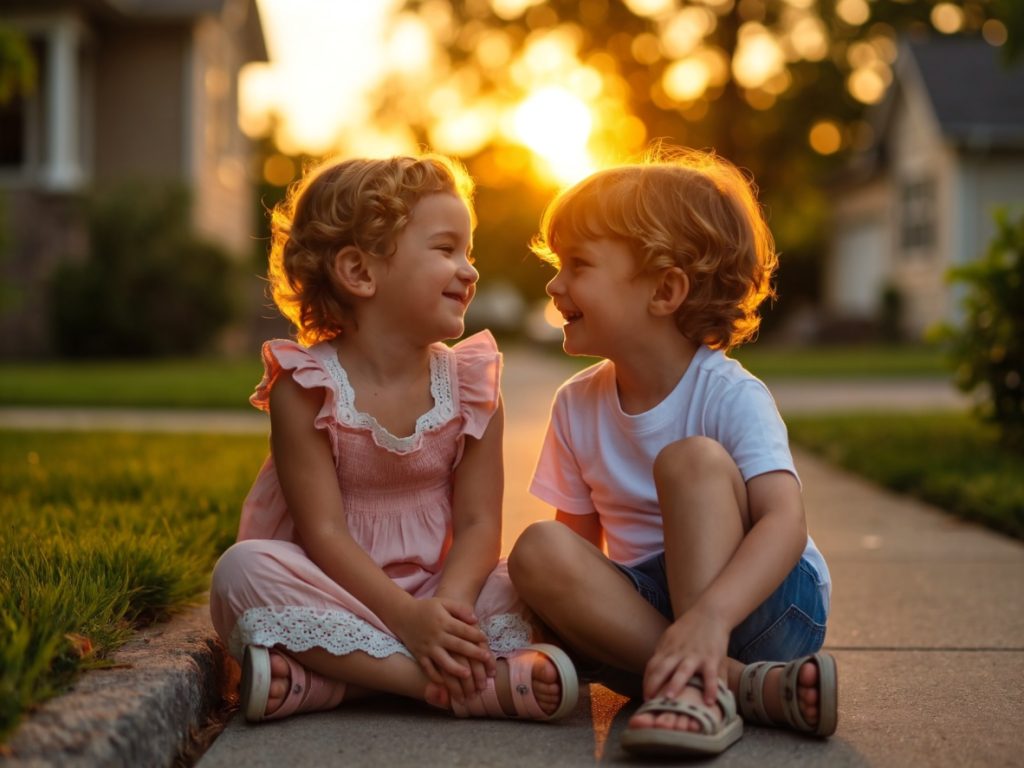
Childhood friendships form without strategy. You do not choose your first best friend based on shared beliefs or life goals. You choose them because they lived nearby or sat next to you or stumbled into your world at exactly the right moment. The reasons are simple, but the impact is not. Those early friendships shape how we understand loyalty, conflict, belonging, and joy. They are the first peer relationships that teach us who we are in the company of equals.
The First Equal
A childhood best friend is the first person outside your family who sees you as an equal. They do not guide you like adults do. They do not depend on you in the same way a pet does. They meet you at your level. That equality creates a type of honesty that adults rarely match. If you were being annoying as a kid, they told you. If you did something bold or hilarious, they celebrated it. Those simple interactions form the earliest blueprint for how we relate to people our own age.
Learning Boundaries in Real Time
Kids learn boundaries through trial and error. You joke until someone stops laughing. You grab a toy or break a rule and see the fallout. But the fallout is recoverable. Childhood friendships bend without breaking. You argue, storm off, and then reconcile within the same afternoon. This cycle teaches resilience, conflict resolution, and forgiveness in ways formal education never could. It shows kids that relationships can survive mistakes.
Shared Imagination
There is something powerful about the way children create worlds together. A cardboard box becomes a spaceship. A bike becomes a racecar. A backyard becomes a kingdom. Childhood best friends breathe life into imagination and reflect it back. You become braver with them than you would be alone. That willingness to take risks and invent worlds stays with you in subtle ways, shaping how you approach creativity and challenge later in life.
The Mirror That Reveals You
A best friend at that age acts like a mirror. They show you your humor, your fears, your strengths, and your quirks. They show you how others might see you. They shape your early understanding of friendship, loyalty, and identity. Even if the friendship fades over time, its influence remains. The lessons do not disappear. They move forward with you into adulthood.
Preparing for the Next Influence
By the time a fourth grade teacher enters your life, you have already learned important lessons about trust and connection from your first best friend. Those early friendships are the training ground that prepares you for deeper relationships, greater challenges, and meaningful mentorship. Looking back, childhood best friends taught us how to step into the social world long before we realized how much we were learning.
What Shapes Us as Children and Who We Become — Series Overview
This three-part series explores the human relationships that quietly shape our emotional, social, and intellectual foundations. Our first pet teaches empathy and responsibility. Our childhood best friend introduces loyalty, imagination, and boundaries. And our teachers — especially around fourth grade — become the first adults outside our families who recognize our potential and guide us toward the person we’re becoming.
- Your First Pet: The First Teacher You Didn’t Realize You Had
- Your Childhood Best Friend: Where Loyalty, Laughter, and Boundaries Begin
- Your Fourth Grade Teacher: The First Adult Who Sees the Person You’re Becoming
If you would like to share your personal story, contribute insight for future articles, or connect with CAHDD™ for upcoming discussions on human development, we would be glad to hear from you.
This work reflects a CAHDD Level 2 (U.N.O.) — AI-Assisted Unless Noted Otherwise creative process.
Human authorship: Written and reasoned by Russell L. Thomas (with CAHDD™ editorial oversight). All final decisions and approvals were made by the author.
AI assistance: Tools such as Grammarly, ChatGPT, and PromeAI were used for research support, grammar/refinement, and image generation under human direction.
Images: Unless otherwise captioned, images are AI-generated under human art direction and conform to CAHDD Level 4 (U.N.O.) standards.
Quality control: Reviewed by Russell L. Thomas for accuracy, tone, and context.
Method: Computer Aided Human Designed & Developed (CAHDD™).