FOR THOSE WHO CREATE IN IMAGE, WORD, FORM, AND SOUND.
What this page is about:
CAHDD™ (Computer Aided Human Designed & Developed) is a human-first movement and transparency framework designed to make human authorship and technological involvement more visible. As AI-generated and AI-assisted work becomes increasingly difficult to distinguish by appearance alone, CAHDD gives creators a simple way to identify who stands behind the work and communicate how it was made.
Why it is important:
If we lose visible authorship, we lose trust, meaning, and fair credit, especially in the design professions where decisions carry cultural and economic weight.
Key takeaways:
- CAHDD is pro-human and pro-responsibility, not anti-technology.
- We support clear disclosure of how work is made, including AI involvement.
- Our staged framework helps creators describe their workflow honestly and consistently.
Best next step:
Visit How It Works to understand the CAHD™ stages system and what it means in practice.
A simple stage system to show how your creation took shape.
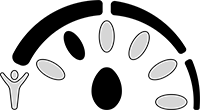
CAHDD uses a simple stage-based system to communicate the balance of human effort, technology, automation, and AI involved in bringing a creation to life. Each stage represents a different type of creative process.
The stage can become part of a creator’s Creator’s Mark, much like artists, craftspeople, and tradespeople have historically signed or marked the things they made. A creator may combine the stage with a personal signature or company logo, use a simple circled stage number ( ③ ), or identify the stage in text such as CAHDD Stage 3 or CAHDD3.
The presentation is flexible. The meaning of the stages is not. The purpose is simply to let creators tell their side of the story by making their human contribution and use of technology visible..

Stage 0 — Traditional Human Craft ( ⓪ )
Fully human-created. No digital tools or automation.
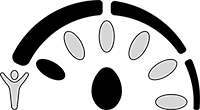
Stage 1 — Digitally Assisted Creation ( ① )
Standard digital tools. Human makes all decisions.
Stage 2 — Algorithmic Assistance ( ② )
Procedural or scripted tools. Fully human-directed. No AI generation.

Stage 3 — Human–AI Hybrid Creation ( ③ )
AI is used, but the human drives the outcome.

Stage 4 — AI-Generated, Human-Curated ( ④ )
AI creates most of the work. Human selects and refines.

Stage 5 — Fully Autonomous AI Creation ( ⑤ )
AI creates the work. Minimal human input.

Stage X — Multi-Phase / Hybrid Pipelines ( ⓧ )
Mixed stages or iterative human–AI workflows.
CAHDD™ (Computer Aided Human Designed & Developed™) is a system for showing how work was actually created: how much was human, and how much involved digital tools, automation, or AI.
The Creator’s Mark identifies who stands behind the work. The CAHDD Stage communicates how the work was made.
Together they provide a simple visual first impression of authorship and process, while more detailed disclosures, metadata, or provenance systems can provide additional information when needed.
Automated provenance can tell you that technology was involved. The Creator’s Mark lets the creator tell you what their involvement was.
For an in-depth explanation of the framework, see How It Works.
The CAHD™ stage system makes that visible by labeling the level of human involvement across design, refinement, and development.
“CAHDD isn’t just about transparency—it’s about protecting your creative legacy.”
Some clients will embrace the precision and efficiency of technology-heavy work, while others will value the authenticity of handcrafted, human-led creativity. The CAHD™ stages make those distinctions visible, empowering artists, architects, designers, engineers, and makers to match their process to the needs and values of their audience.
The Creator’s Mark — simple, flexible, and recognizable
The CAHDD “Creator’s Mark” adapts the time-honored tradition of tradespeople, craftspeople, and artists placing a maker’s mark or signature on their work to say, “I made this,” or “We made this, and we stand behind it.” It can accompany an individual’s signature, a studio logo, a project credit, or the work itself. A person, group of people, studio, team, collective, or organization can authorize a “Creator’s Mark”.
CAHDD restores the creator’s mark to modern work. The mark says who stands behind it. The stage says how the work was made.
1. Signature or Logo + Stage
Pair the CAHDD Stage with your existing signature, logo, studio mark, or other Creator’s Mark.
2. Circled Stage Symbol
Use the corresponding circled stage symbol as a simple, standalone visual mark: ⓪ ① ② ③ ④ ⑤ ⓧ
3. CAHDD Stage Text or Shorthand
Identify the stage in text, such as CAHDD Stage 3, CAHDD-3, or the compact CAHDD3 shorthand.
4. CAHDD Courtesy Graphics
Use the optional CAHDD Watermarks or Stage Icons provided as a courtesy for creators who prefer ready-to-use graphics. These are provided for convenience and are not required to use the CAHDD Rating System.

CAHDD is not a product or a marketplace — it is a philosophy, a framework, and a growing movement. Our goal is to raise awareness, document best practices, and give the creative community the tools to thrive in a future where technology supports — not replaces — human ingenuity. By sharing, adopting, and spreading the CAHDD philosophy, you help strengthen a culture of transparency, creativity, and respect for human contribution worldwide.
CAHDD operates on an honor system. The stages are self-declared, and the icons or indicators themselves are not legal proof. If a client, partner, or court requests verification, it’s the responsibility of the creator or organization to provide supporting material—for example, work-in-progress files, timestamps, prompt logs, layered source files, or other documentation of their process.
“This is an honor-based framework. Icons and watermarks are tools, not proof. Creator accountability is required to support claims.”
This supporting information doesn’t just back up a stage declaration—it’s also a critical safeguard for intellectual property rights. In copyright disputes, clear evidence of human creative contribution can determine whether a work qualifies for protection. Retaining structured proof of your workflow helps demonstrate authorship, clarify where and how AI tools were used, and protect your ownership claims.
For clients, this transparency builds trust. For creators, it provides legal resilience in a landscape where questions of authorship, originality, and AI involvement are becoming more complex.
Who Built This
CAHDD™ is a not-for-profit initiative developed by 3DAllusions LLC and implemented in real-world practice at 3DAStudio™.
It was created to solve a simple problem: showing how work is actually made in an era of AI and automation.
Exploring Human-Centered Questions Together – coming soon