
What this page is about:
This page explains how CAHDD™ works in practice. The Creator’s Mark identifies who stands behind the work, while the CAHDD Stage communicates how the work was made, from traditional human craft through digital tools, automation, AI assistance, and increasingly autonomous generation.
Why it is important:
As AI and automated tools become more powerful, appearance alone can no longer tell us how something was created. CAHDD gives creators a simple, voluntary way to make their human contribution and use of technology visible.
Key takeaways:
• The Creator’s Mark identifies the person, studio, or organization standing behind the work.
• The CAHDD Stage describes the creative process and level of technological involvement.
• The Stage can be displayed consistently in several simple ways without requiring creators to adopt a particular graphic style.
• CAHDD complements embedded provenance and automated labeling rather than attempting to replace them.
Best next step:
Visit Authorship & Identity to understand why signatures, logos, authorship, and accountability matter in an age of generated content.
How It Works
CAHDD™ (Computer Aided Human Designed & Developed) is a voluntary transparency framework for communicating the human and technological process behind creative and technical work.
The system has two simple parts:
The “Creator’s Mark” answers: Who stands behind this work?
The CAHDD Stage answers: How was this work created?
Together, they provide a visible, human-readable first impression of authorship and process. They can work alongside detailed transparency statements, embedded metadata, C2PA Content Credentials, invisible watermarking, and other provenance systems.
CAHDD does not require creators to abandon their own identity or adopt CAHDD branding. A personal signature, studio logo, company mark, byline, or project credit can remain the primary mark of authorship. The CAHDD Stage simply adds information about the process behind the work.
The mark says who. The Stage says how.
The CAHDD Stage System
The CAHDD Stage System provides a shared language for describing the balance of human and technological participation in a work.
The Stages do not rank artistic quality, professional value, morality, or technical advancement. Each Stage describes a different type of creative process.
A CAHDD Stage can be displayed in four primary ways.
1. Complete CAHDD Stage Graphic
Use the official CAHDD Stage icons or watermark graphics.
These ready-to-use graphics provide a complete, recognizable way to display a selected Stage. They are offered as a courtesy for creators and organizations that want a consistent visual treatment.
CAHDD also provides a free Watermark Manager for Photoshop to help creators place the official graphics on their work.
2. Written Stage Designation
State the Stage in its complete written form:
CAHDD Stage 3
This works well in captions, portfolios, project descriptions, contracts, credits, contest entries, and transparency statements.
3. Compact Stage Designation
When space is limited, use the compact form:
CAHDD3
This communicates the same Stage without requiring a complete graphic or the full written designation.
4. Circled Stage Character
Use the corresponding circled character:

These are standard Unicode text characters that can be copied and pasted into most documents, captions, websites, signatures, logos, and design applications.
The circled character is the most compact and flexible expression of the system. Until the CAHDD Stages become more widely recognized, however, a character such as ③ may not tell the complete story by itself.
Creators who want greater immediate clarity may pair the character with CAHDD, use CAHDD3 or CAHDD Stage 3, or apply one of the complete CAHDD icons or watermarks.
All four expressions communicate the same underlying Stage. They may be used individually or together.
The goal is consistency in what the Stage means, with flexibility in how creators choose to display it.
5. Or a Combination of the Above
These initial examples below show how we have applied the CAHDD system within our own signatures and affiliated business identities. They demonstrate several possible approaches, not required logo treatments. Creators may develop an expression that fits their own work and identity.




Creating a “Creator’s Mark”
Any CAHDD Stage indicator can be paired with an existing form of authorship.
An artist may place ② beside a signature. A studio may incorporate ② into its logo. A photographer may place CAHDD2 beside a credit. A company may use the complete Stage graphic alongside its established identity.
The identity remains the creator’s own. The Stage adds information about the process.
A “Creator’s Mark” may represent an individual, a team, a studio, a collective, or an organization. In every case, identifiable people must stand behind the declaration and accept responsibility for its accuracy.
Creators do not have to choose one display method for every situation. A studio may use the complete CAHDD watermarks on images presented through its website while using Stage-specific versions of its logo on images distributed elsewhere.
The methods can be adapted to the audience, placement, and intended use of the work.
The method of display may change. The meaning of the selected CAHDD Stage does not.
Visible Transparency and Digital Provenance
CAHDD is designed to work alongside automated and embedded provenance systems, not replace them.
Digital watermarks, metadata, Content Credentials, C2PA, and similar technologies can provide machine-readable information about a file’s origin, history, and use of particular technologies.
CAHDD provides the human-readable side of that conversation: a visible declaration from the person or organization standing behind the work.
Digital provenance can document what happened to a file. CAHDD lets creators tell their side of the story.
The two approaches are complementary. Embedded systems may provide detailed technical information, while a visible CAHDD Stage offers an immediate first impression of the human-tech balance behind the work.
An Honor System Supported by Process
CAHDD operates on an honor system. Stages are self-declared, and a Stage indicator, icon, watermark, or “Creator’s Mark” is not a certificate or independent legal proof of how a work was created.
The responsibility for an honest Stage declaration remains with the creator.
Creators are encouraged to retain reasonable documentation of their process, including work-in-progress files, drafts, layered source files, prompt logs, timestamps, metadata, and process videos.
If a client, contest, partner, or legal proceeding requires evidence, that supporting material can help substantiate the Stage declaration and document the creator’s human contribution.
Maintaining these records may also help creators support authorship and intellectual property claims as questions surrounding AI, provenance, and copyright continue to evolve.
“CAHDD isn’t just about transparency. It’s about protecting your creative legacy.”
Creator Choice Comes First
CAHDD is voluntary and self-elected. We do not dictate how people create, and we do not claim that an icon or Stage declaration independently verifies a creative process.
No platform owns the definition. No automated system decides what a creator’s contribution counts as.
As automated labeling, invisible watermarking, metadata, and AI detection become more common, CAHDD gives creators a visible way to add their own voice to the record.
Use an official CAHDD watermark or icon. Write CAHDD Stage 3 or CAHDD3. Place ③ beside a signature or incorporate it into a studio logo. Use one method or combine them.
The choice belongs to the creator.
The Stage is the shared language. The “Creator’s Mark” makes it yours.
CAHDD™ Stages
The Stages below describe the spectrum of creative processes, from fully human-made work through software-assisted, automated, AI-assisted, and AI-driven creation., from fully human-made, through software and automation-assisted creation, to AI-assisted and AI-driven work.
CAHDD™ Stages — TechRatio™
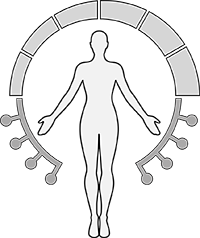
Icon Level 0


Watermark Level 0
Stage 0: Traditional Human Craft
Visual/Design: Entirely handmade with physical media — painting, drawing, sculpture, model-making, drafting, photography with film, etc. No digital tools, no automation, and no AI are involved. This represents the purest point on the TechRatio™, reflecting complete human authorship.
Music: Pure acoustic performance and recording. No digital editing, no AI, no automation. Acoustic music reflects the lowest end of the Software–Human Ratio™, relying entirely on human skill.
Summary: 100% human expression through physical or analog methods only. This stage establishes the baseline of the Human–Tech Balance Index™.
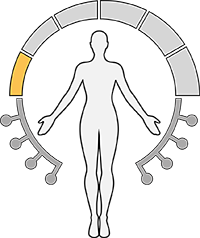
Icon Level 1


Watermark Level 1
Stage 1: Digitally Assisted Creation
Visual/Design: Created using digital tools such as Photoshop, CAD, Illustrator, or digital sculpting software, but with all creative direction and execution performed by humans. There is no algorithmic generation or AI involvement — the software functions strictly as a tool.
Music: Human compositions and performances that are edited, mixed, or mastered using digital software, without automated composition or AI generation. Examples include manual EQ, reverb, timing adjustments, or multitrack mixing.
Summary: Human creativity leads entirely, with digital tools extending capability but not altering authorship. This stage remains near the human-dominant end of the TechRatio™ and Software–Human Ratio™ scales.
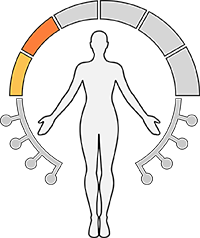
Icon Level 2


Watermark Level 2
Stage 2: Algorithmic Assistance
Visual/Design: Involves algorithmic or procedural tools—such as scripts, filters, physics simulations, parametric modeling, or photogrammetry—under human control. No derivative AI is used; automation occurs only at a task level, not in content creation.
Music: Uses intelligent effects, adaptive mastering, auto-mixers, or algorithmic tools under human supervision, but does not generate new musical content. The human remains the composer and performer.
Summary: Human direction remains central while algorithmic tools provide structured assistance. This stage represents a mid-range TechRatio™, where technology supports execution but not ideation or content generation.
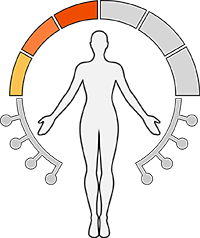
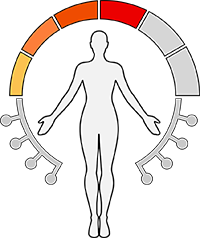
Icon Level 3


Watermark Level 3
Stage 3: Human–AI Hybrid Creation
Visual/Design: The human and AI collaborate in a balanced, structured workflow. This may involve the human providing a concept, sketch, or simple 3D model, which the AI then renders or enhances into a more detailed image, or the reverse—the AI generates a derived base image which the human directs, edits, and refines into the final result. Either way, the human maintains clear creative direction, defining the vision, structure, and key decisions, while the AI acts as a productivity amplifier. This stage reflects a middle ground on the TechRatio™, where human and machine contributions are distinct yet complementary.
Music: A hybrid approach combining human composition, performance, or arrangement with AI-derived instrumentation, effects, or structure. For example, a human may lay down core melodies and rhythms, and an AI system expands or reorchestrates them — or vice versa, with the human shaping raw AI output into a structured piece. This represents a balanced Software–Human Ratio™, where neither side fully dominates the creative process.
Summary: Stage 3 sits at the center of the Human–Tech Balance Index™, representing the most common and practical hybrid workflows today. It allows creators to leverage AI as a powerful extension of their capabilities without surrendering authorship. Whether the human or the AI initiates the creative process, direction and intent remain firmly in human hands.
Icon Level 4


Watermark Level 4
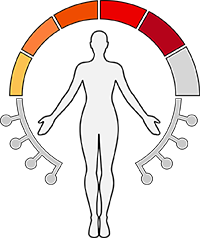
Stage 4: AI-Generated, Human-Curated
Visual/Design: The majority of content is derived by AI systems. The human role focuses on prompting, selecting outputs, and making limited edits or adjustments. Creative control shifts toward the system.
Music: AI generates most of the arrangement or composition. The human acts primarily as curator, mixer, or light editor, making final refinements rather than directing core content.
Summary: The TechRatio™ and Software–Human Ratio™ lean heavily toward machine authorship, with the human serving as curator or overseer. Transparency becomes critical at this stage for honest disclosure.
Icon Level 5


Watermark Level 5
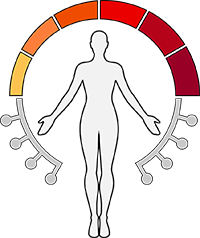
Stage 5: Fully Autonomous AI Creation
Visual/Design: The work is produced entirely by AI with little or no meaningful human creative input beyond initial configuration or triggering. This represents the AI-dominant extreme of the TechRatio™.
Music: The AI autonomously composes, arranges, and produces the work, with no human involvement in performance, composition, or editing.
Summary: A fully machine-originated stage. The human acts as spectator or reviewer rather than creator. On the Human–Tech Balance Index™, this represents complete technological authorship.
Icon Level X


Watermark Level X
Stage X: Hybrid / Multi-Phase Workflows
Visual/Design: Applies to multi-stage or experimental pipelines that span several CAHDD stages or involve real-time human–AI interplay. Examples include a project starting at Stage 2 for modeling, moving through Stage 4 for AI rendering, then receiving extensive Stage 3 post-production — or live, iterative human–AI improvisation. Stage X is flexible by design, acknowledging emerging tools, iterative back-and-forth processes, and future technologies that don’t fit neatly into a single stage.
Music: Improvised or layered collaborations where humans and AI interact dynamically — such as live co-performance, real-time AI accompaniment, or multi-pass workflows involving composition, generation, and human restructuring.
Summary: Stage X recognizes that some workflows combine multiple distinct phases or unfold through simultaneous human–AI improvisation. It’s not simply a reversed or hybrid Stage 3 — it’s for complex, multi-modal pipelines that reflect the evolving frontier of creative collaboration.
There are Many Disciplines and Professions that are Applicable:
The CAHDD™ TechRatio™ philosophy was created to bring transparency and trust to all forms of human creativity and innovation. Its principles apply far beyond art and design—to engineering, architecture, music, medicine, education, research, product development, writing, entertainment, and countless other disciplines. Many of these professions already feel the influence of technology and automation, while others will encounter it in ways not yet fully understood. The goal of CAHDD™ is to provide a shared language for expressing how humans and technology collaborate across every creative and technical domain, allowing each field to clearly communicate the balance of human authorship and technological assistance in its work.
The CAHDD framework recognizes that technology has become inseparable from creation and problem-solving. Architects use parametric design tools that explore forms once impossible to draw by hand. Engineers run automated simulations that help them refine complex systems. Musicians compose through hybrid digital setups that merge human performance with algorithmic harmony. Writers and educators rely on digital tools to analyze, summarize, and teach with greater clarity. Even in medicine, AI is helping visualize anatomy, simulate surgeries, and interpret data at scales no human could manage alone. Across all of these professions, CAHDD™ provides a way to express the degree of human versus technological contribution without judgment—simply as a transparent measure of process.
The CAHDD TechRatio™ framework applies to every field where humans and technology intersect. Below are domain-specific interpretations showing how the same seven stages (0–X) manifest across creative and technical professions—from art and architecture to music, film, education, and beyond. These examples evolve as tools and workflows change, and we welcome community input to refine and expand them over time.
Index of Professions:
• Visual Arts & Illustration
• Architecture & Design
• Music & Audio Production
• Writing & Literature
• Film, Animation & Game Design
• Education & Research
• Engineering & Technical Design
• Product & Fashion Design
• Medical & Scientific Visualization
• Marketing, Media & Communication
• Crafts, Makers & Artisans
• Performing Arts (Acting, Dance, Stage)
Visual Arts & Illustration
Stage 0 – Traditional media only. Hand-drawn, painted, or sculpted work without any digital or automated tools.
Stage 1 – Fully digital artwork under human control using standard design software.
Stage 2 – Use of scripts, filters, or automation plugins while maintaining full creative direction.
Stage 3 – AI or software suggestions for composition, color, or lighting used under human guidance.
Stage 4 – AI or generative systems produce large portions of the image, refined and composited by the artist.
Stage 5 – AI creates nearly the entire image or sequence, artist curates or performs post-production adjustments.
Stage X – Fully autonomous image generation without meaningful human direction.
Architecture & Design
Stage 0 – Hand sketches or physical models produced entirely by humans.
Stage 1 – CAD or 3D modeling software used manually without automation.
Stage 2 – Parametric or scripted modeling under human direction.
Stage 3 – AI or algorithmic tools assisting with layout, optimization, or material study.
Stage 4 – Generative design producing structures or concepts, refined and approved by the designer.
Stage 5 – AI produces full building forms or site plans with minimal human revision.
Stage X – Automated design output with no direct human authorship or oversight.
Music & Audio Production
Stage 0 – Acoustic or analog performance recorded without automation.
Stage 1 – Digital recording and editing tools used by the musician.
Stage 2 – Plugin-based or scripted automation under human control.
Stage 3 – AI-assisted composition, arrangement, or mastering suggestions refined by the artist.
Stage 4 – AI generates full musical sections that the musician edits or overlays.
Stage 5 – AI creates entire compositions; human provides quality control or curation.
Stage X – Fully automated generative music with no human input.
Writing & Literature
Stage 0 – Handwritten or manually typed work without digital assistance.
Stage 1 – Digital writing tools used only for convenience and formatting.
Stage 2 – Grammar and style automation, still fully human-directed.
Stage 3 – AI suggestion tools assist with phrasing or summarization under editorial control.
Stage 4 – AI generates large sections of content, human edits and polishes.
Stage 5 – AI authors most text, human curates or approves.
Stage X – Fully autonomous generative writing without meaningful human authorship.
Film, Animation & Game Design
Stage 0 – Traditional hand-drawn animation, live-action film, or analog processes.
Stage 1 – Digital production pipelines fully human-driven.
Stage 2 – Automated rendering, motion capture, or rigging controlled by artists.
Stage 3 – AI assists with lighting, compositing, or motion interpolation.
Stage 4 – AI generates scenes or sequences refined by editors.
Stage 5 – AI builds full productions or levels, humans finalize.
Stage X – Fully autonomous generation of visual media.
Education & Research
Stage 0 – Human-taught instruction, fully analog delivery.
Stage 1 – Digital presentation tools used manually.
Stage 2 – Automated grading, formatting, or slide generation under human control.
Stage 3 – AI-assisted tutoring or research summarization guided by educators.
Stage 4 – AI develops lesson materials, educators curate and contextualize.
Stage 5 – AI handles majority of instruction or analysis; human oversight remains.
Stage X – Autonomous knowledge delivery or data interpretation with no human involvement.
Engineering & Technical Design
Stage 0 – Manual drafting, physical prototyping.
Stage 1 – CAD or simulation tools operated directly by engineers.
Stage 2 – Automated calculation, simulation, or optimization scripts.
Stage 3 – AI proposes design optimizations, materials, or tolerances under review.
Stage 4 – Generative design creates prototypes refined by humans.
Stage 5 – AI designs full systems; engineers validate output.
Stage X – Fully autonomous engineering design with no human input.
Product & Fashion Design
Stage 0 – Manual sketching or hand tailoring.
Stage 1 – Digital design software operated by human designer.
Stage 2 – Pattern automation, digital prototyping, or parametric scaling.
Stage 3 – AI generates colorways, patterns, or silhouettes for refinement.
Stage 4 – AI develops full designs reviewed and modified by human.
Stage 5 – AI drives the majority of creative process; human acts as brand curator.
Stage X – Fully AI-generated product or collection.
Medical & Scientific Visualization
Stage 0 – Hand-drawn diagrams or traditional illustration.
Stage 1 – Digital modeling and visualization by human specialists.
Stage 2 – Automated rendering, measurement, or simulation under supervision.
Stage 3 – AI aids in segmentation, reconstruction, or annotation.
Stage 4 – AI generates full models or visualizations refined by specialists.
Stage 5 – AI generates and labels full datasets; human validation only.
Stage X – Fully autonomous simulation or visualization.
Marketing, Media & Communication
Stage 0 – Hand-crafted or analog campaigns.
Stage 1 – Digital marketing or layout software operated manually.
Stage 2 – Automation for formatting, scheduling, or analytics under control.
Stage 3 – AI suggestions for targeting, headlines, or visual layout.
Stage 4 – AI generates majority of assets, humans select and refine.
Stage 5 – AI executes entire campaign, human supervises output.
Stage X – Fully autonomous marketing or content delivery.
Crafts, Makers & Artisans
Stage 0 – Fully handmade craftsmanship.
Stage 1 – Use of power tools or digital measuring aids.
Stage 2 – CNC or laser cutting under human control.
Stage 3 – AI-aided design planning or material layout suggestions.
Stage 4 – Automated fabrication from AI-generated plans refined by maker.
Stage 5 – Robotic fabrication with minimal human setup.
Stage X – Fully autonomous fabrication or production.
Performing Arts (Acting, Dance, Stage)
Stage 0 – Fully live, human performance.
Stage 1 – Digital lighting, sound, or camera systems under human control.
Stage 2 – Choreography or direction using motion capture or automation.
Stage 3 – AI-generated lighting cues, choreography suggestions, or virtual scene assists.
Stage 4 – Virtual actors or AI avatars guided by human performers or directors.
Stage 5 – AI controls performance, voice, or movement with human supervision.
Stage X – Fully synthetic performance or digital actor autonomy.
Closing Paragraph:
The CAHDD™ TechRatio™ framework is designed to evolve with technology and community participation. Each domain adapts these stages to reflect its own creative and technical realities. The framework is flexible, open, and continuously evolving. We recognize that no single organization can define every nuance of creative and technical work, which is why the CAHDD™ initiative invites participation from practitioners, educators, researchers, and industry professionals alike. Real-world experience and honest insight are essential for keeping this system relevant and truthful. We encourage professionals across all fields to contribute refinements, share examples, and help ensure that the CAHDD™ TechRatio™ remains transparent, accurate, and human-centered as the world continues to innovate.
Flexible and Unobtrusive
CAHD icons and watermarks are designed to be versatile indicators, never distractions. Icons are ideal for use in contexts like online stores, literature, or product pages, while watermarks provide a subtle but visible signal of stage/TechRatio directly on imagery.
Watermarks can be rendered in any color or combination that complements the artwork or brand logo without clashing or distracting. As a general guideline, they should be sized at approximately 2% of the image width (for example, a 1200-pixel-wide image would use a watermark about 24 pixels wide). Opacity may be reduced as long as watermark is Legible. Placement should ensure visibility but never overwhelm the work itself.
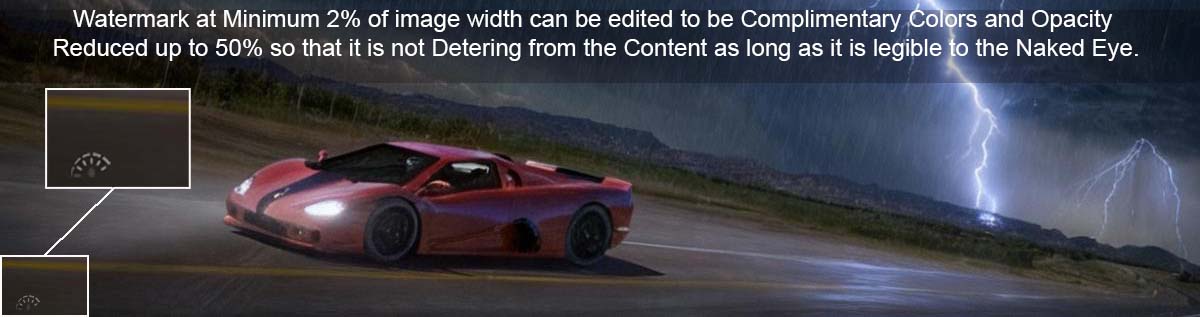
Watermarks may also be integrated into an artist’s or studio’s logo, giving precedence to the creator’s branding on all their work. The CAHD stage indicator is meant to support transparency, not impose external branding. Our proposal is an indicator system — not a replacement for identity, Watermark designed to be as flexible as possible to integrate with end users standards.
In practice, the artwork or content always comes first. Phases and indicators matter, but they must remain in service of the creative work, not the other way around. For this reason, watermarks should harmonize with the visual context or logo they accompany.
We welcome suggestions and examples from others on evolving graphic indicators or new approaches to the “TechRatio.” This system is intentionally open to refinement by the community.
All icons and watermarks are the intellectual property of CAHD™ and parent company 3DAllusions LLC. They may be used freely to indicate a CAHD™ stage, but may not be redistributed under false claims of authorship, nor sold as standalone assets. Their use is permitted within creative works, projects, or commercial materials solely as a stage/TechRatio indicator. Any use beyond this scope requires explicit permission.Licensing
CAHDD™ Stage Indicator Graphics License
Version 1.4 — August 2026
© 2024-2026 3DAllusions LLC™. All rights reserved.
License and Permitted Use
The official CAHDD icons, watermarks, and circled Stage graphic files are provided free of charge for personal, professional, educational, nonprofit, and commercial use as honest CAHDD Stage indicators.
Creators may resize, recolor, reposition, and adjust the opacity of the official graphics. Circled Stage graphics may also be adapted and incorporated into signatures, logos, studio marks, project credits, and other forms of visible authorship, provided the Stage remains legible and is not used misleadingly.
The standard Unicode characters ⓪ ① ② ③ ④ ⑤ ⓧ are not proprietary CAHDD graphics. They may be freely typed, copied, styled, and incorporated into a “Creator’s Mark” or other Stage declaration.
Official CAHDD graphics may not be sold or licensed as standalone assets, repackaged within another downloadable asset collection, presented as another party’s original indicator system, or used to imply certification, verification, sponsorship, or endorsement by CAHDD or 3DAllusions LLC.
Completed creative works, commercial materials, logos, and “Creator’s Marks” containing properly used CAHDD Stage indicators may be freely published, distributed, and sold.
Official CAHDD download packages may be shared only in their complete, unmodified form with the applicable license included.
Use of the official graphics is governed by the CAHDD™ Stage Indicator Graphics License, Version 1.4.
[View or Download the Complete CAHDD Stage Indicator Graphics License]
For inquiries, custom permissions, or partnership opportunities:
Russell.Thomas@CAHDD.org