
The Beauty Hidden in Imperfection
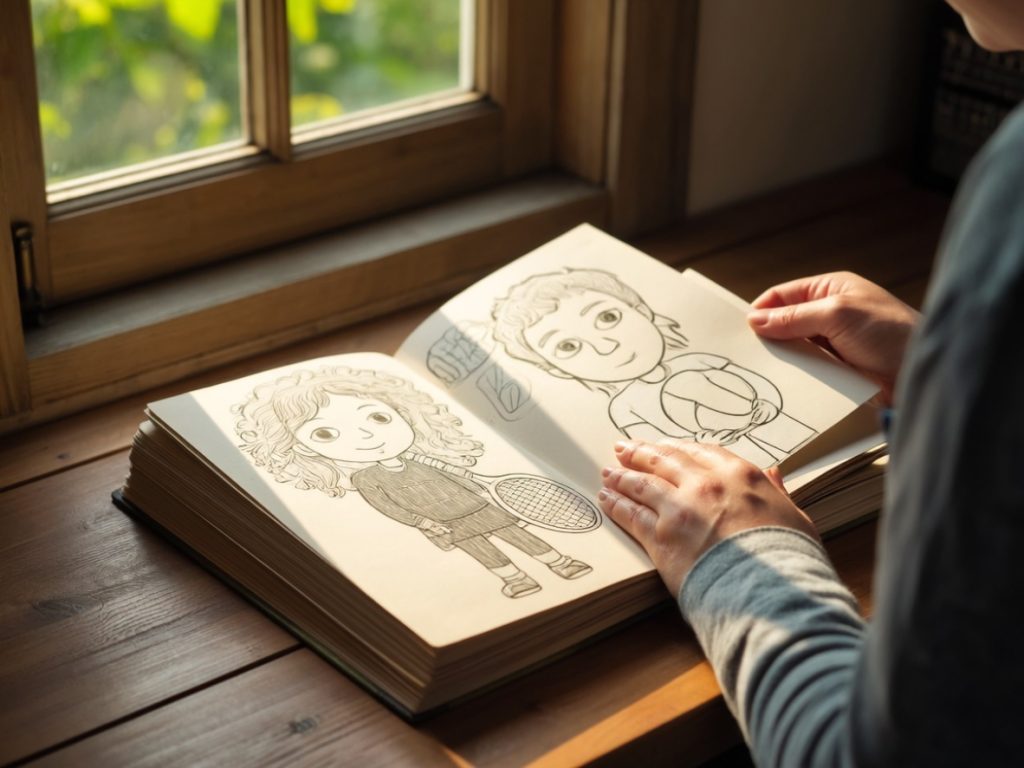
Every artist, designer, or architect remembers their early sketchbooks — the ones filled with awkward drawings, abandoned ideas, and pages we’d rather no one else ever see. At the time, those pages felt disposable. Unfinished. Embarrassing, even.
Yet those messy sketchbooks were the birthplace of everything we eventually became.
Before any polished image, before any client-ready rendering, before any award-winning project, there were rough scribbles, false starts, and failed attempts. Those pages weren’t evidence of weakness — they were evidence of growth, curiosity, and the courageous willingness to explore without certainty.
Today, in a world where AI can produce a perfectly rendered image in seconds, it’s tempting to overlook the developmental power of those flawed beginnings. But the truth remains: the messy sketchbook stage is where human creativity is forged.
Why the Process Matters More Than the Output
When AI creates something quickly, it’s easy to think the value lies in the final image. But humans don’t grow from finished work. We grow from the process it takes to get there.
The journey teaches us far more than the destination:
We learn to observe. We learn to revise.
We learn to break and rebuild.
We learn to sit with uncertainty and push through it.
We learn to chase ideas, lose them, and chase them again.
We learn to think in layers, not shortcuts.
This is the work that builds creative judgment, emotional intelligence, spatial awareness, and the strategic thinking clients actually rely on.
AI can produce options — but it cannot navigate the human reasoning that transforms those options into meaningful design. It cannot wrestle with ambiguity, leap across intuition, or connect unrelated ideas into something original.
Humans learn those abilities in the messy sketchbook stage.
When We Skip the Struggle, We Lose the Growth
If you remove the messy creative struggle — the trial and error, the failed sketches, the pages we tear out — you remove the space where human capability is formed.
The risk today isn’t that AI is too powerful.
The risk is that we start believing the journey no longer matters.
When people rely only on instant results from generative tools, they lose the chance to:
- build creative muscles
- develop taste
- refine judgment
- iterate meaningfully
- understand why something works
- grow as thinkers, not just producers
Human creativity isn’t just about arriving at a solution.
It’s about the transformation that happens inside us while searching for one.
The Value of Human Refinement
A designer once said, “AI gives you the notes, but humans write the melody.” The messy sketchbook is where that melody begins.
Even when AI assists, it’s humans who decide:
- what to keep
- what to change
- what aligns with the emotional goal
- what supports the story
- what expresses the intent
- what means something
Refinement is not an afterthought. It is the core of human creativity.
This is why CAHDD™ recognizes refinement as a central part of the creative process — not just editing, but the growth, judgment, and intentionality that occur when humans take raw ideas and shape them into something meaningful.
Where CAHDD™ Fits Into the Process
CAHDD™ exists to protect the human-led stages that AI can’t replicate. The messy sketchbook stage — full of exploration, mistakes, and emerging insight — is exactly what the TechRatio™ clarifies and honors.
Humanocentricus™ further reinforces this philosophy by reminding us that creativity is not just production. It is identity, intention, growth, and the deeply human experience of discovering an idea through effort.
AI can accelerate the result.
It cannot be the process.
A Human-Centered Invitation
We would love to hear what your messy sketchbook looked like. What early attempts, rough ideas, or imperfect pages shaped your creative journey? Those unfinished beginnings are the true foundation of the work we create today.
CAHDD™ Creative Development Series
This index gathers our full collection of articles exploring childhood creativity, the human journey, and the core philosophies behind CAHDD™ and Humanocentricus™. Each article advances our mission to protect the human processes that shape imagination, taste, skill, and cultural evolution in the age of AI.
- Why Humanity Still Matters in the Age of AI: Protecting the Creative Journey
- Why Childhood Creativity Still Shapes the Adults We Become
- The Messy Sketchbook Matters More Than the Final Image
- Not Everything Is on the Internet: The Human Experience AI Cannot Access
- Fine Motor Skills, Focus, and the Slow Art of Becoming Human
- Why Real Skill Still Captivates Us in a Synthetic World
- The Danger of Cultural Stagnation When Creativity Is Outsourced to AI
- Human Taste Still Shapes AI — Not the Other Way Around
If you would like to contribute your story, share insight with future articles, or join CAHDD™ as an ambassador, we would love to hear from you.
This work reflects a CAHDD Level 2 (U.N.O.) — AI-Assisted Unless Noted Otherwise creative process.
Human authorship: Written and reasoned by Russell L. Thomas (with CAHDD™ editorial oversight). All final decisions and approvals were made by the author.
AI assistance: Tools such as Grammarly, ChatGPT, and PromeAI were used for research support, grammar/refinement, and image generation under human direction.
Images: Unless otherwise captioned, images are AI-generated under human art direction and conform to CAHDD Level 4 (U.N.O.) standards.
Quality control: Reviewed by Russell L. Thomas for accuracy, tone, and context.
Method: Computer Aided Human Designed & Developed (CAHDD™).