
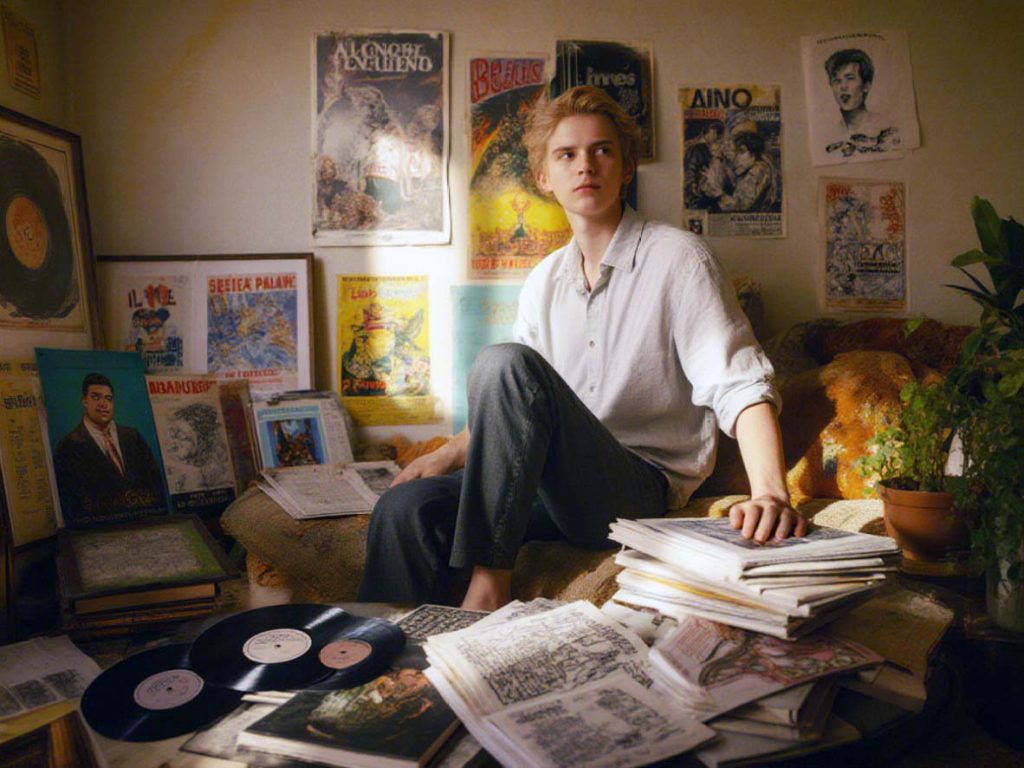
When Creativity Becomes Convenience
Human creativity has always been an engine of change. Every artistic movement, every design revolution, every architectural breakthrough — all of it came from people willing to stretch beyond what already existed. This is what keeps culture alive. It evolves because humans push, experiment, rethink, and rebel.
But something subtle and dangerous happens when people rely too heavily on AI for creativity: culture begins to slow down.
AI cannot create new aesthetics from nothing.
It can only rearrange what already exists.
It imitates the past — it does not originate the future.
When a generation offloads imagination to machines, we risk replacing innovation with repetition.
How Cultural Stagnation Begins
Cultural stagnation doesn’t happen overnight. It creeps in quietly:
- people stop experimenting because instant results feel easier
- trends become more homogenized because models recycle the same influences
- design becomes more derivative because AI pulls from what’s most statistically common
- new voices struggle to emerge because algorithms bias the “popular” and suppress the unusual
- creative risk naturally declines because tools do the thinking for us
The more we offload our imagination to automation, the less we develop the cognitive muscles required to innovate. Instead of pioneering new movements, we get stuck recycling old ones.
As one commenter wisely put it, “AI is the emperor’s new clothes.” It dazzles, but it doesn’t deepen culture — people do.
Human Imagination Is the Engine of Meaning
Culture evolves because humans bring their lives, memories, struggles, and experiences into their work. A community’s identity is shaped by people reacting to their environment, their challenges, their dreams, and their historical moment.
AI has no moment.
No history.
No lived experience.
No cultural identity.
It cannot respond to the world — only to its training data.
When the world changes, humans adapt creatively.
Models do not.
This is why human imagination is irreplaceable: it responds to life.
Our Responsibility to the Next Generation
If we want future generations to contribute meaningfully to culture, we must give them more than tools. We must give them the space and encouragement to create, not just generate.
There is a huge difference between:
A child who draws because they have something to express.
vs.
A child who types a prompt because they want something to post.
One builds vision.
The other builds dependence.
If young creatives grow up believing their ideas aren’t worth developing because AI can do it faster, we risk raising a generation that never discovers its own artistic identity — only the ability to remix someone else’s.
Where CAHDD™ Fits Into the Cultural Conversation
CAHDD™ is more than a transparency system. It is a cultural safeguard — a reminder that innovation requires human involvement at every level. The TechRatio™ reveals the balance of human vs. AI contribution, making it harder for human creativity to be erased or overshadowed.
Humanocentricus™ reinforces the philosophical truth behind this: culture thrives when humans create, not when they outsource creation to machines. Technology can assist, expand, and accelerate — but it cannot replace the imaginative spark that drives cultural evolution.
Protect the spark, and you protect the future.
A Human-Centered Invitation
We would love to hear what cultural movement, artistic moment, or creative shift shaped you. What era of design, music, film, or art influenced your worldview? These personal connections remind us how important it is to keep human imagination alive.
CAHDD™ Creative Development Series
This index gathers our full collection of articles exploring childhood creativity, the human journey, and the core philosophies behind CAHDD™ and Humanocentricus™. Each article advances our mission to protect the human processes that shape imagination, taste, skill, and cultural evolution in the age of AI.
- Why Humanity Still Matters in the Age of AI: Protecting the Creative Journey
- Why Childhood Creativity Still Shapes the Adults We Become
- The Messy Sketchbook Matters More Than the Final Image
- Not Everything Is on the Internet: The Human Experience AI Cannot Access
- Fine Motor Skills, Focus, and the Slow Art of Becoming Human
- Why Real Skill Still Captivates Us in a Synthetic World
- The Danger of Cultural Stagnation When Creativity Is Outsourced to AI
- Human Taste Still Shapes AI — Not the Other Way Around
If you would like to contribute your story, share insight with future articles, or join CAHDD™ as an ambassador, we would love to hear from you.
This work reflects a CAHDD Level 2 (U.N.O.) — AI-Assisted Unless Noted Otherwise creative process.
Human authorship: Written and reasoned by Russell L. Thomas (with CAHDD™ editorial oversight). All final decisions and approvals were made by the author.
AI assistance: Tools such as Grammarly, ChatGPT, and PromeAI were used for research support, grammar/refinement, and image generation under human direction.
Images: Unless otherwise captioned, images are AI-generated under human art direction and conform to CAHDD Level 4 (U.N.O.) standards.
Quality control: Reviewed by Russell L. Thomas for accuracy, tone, and context.
Method: Computer Aided Human Designed & Developed (CAHDD™).