
One of the most casually abused phrases in the AI debate is “public-facing content.”
It sounds neutral. Technical. Almost reasonable.
It is none of those things.
“Public-facing” has quietly become a rhetorical shortcut used to imply permission where none was given, consent where none was offered, and donation where income was intended. The phrase does moral work it has no right to do.
So let’s slow it down and define terms honestly.
If I operate an online portfolio showcasing my work, that work is visible because I want to attract clients, not because I am offering it up for unrestricted use. If I run an online store selling artwork, illustrations, designs, or photographs, that visibility exists for one reason: compensation. Feeding my family is not a side effect. It is the purpose.
Visibility does not convert labor into a commons.
Public-facing does not mean public property.
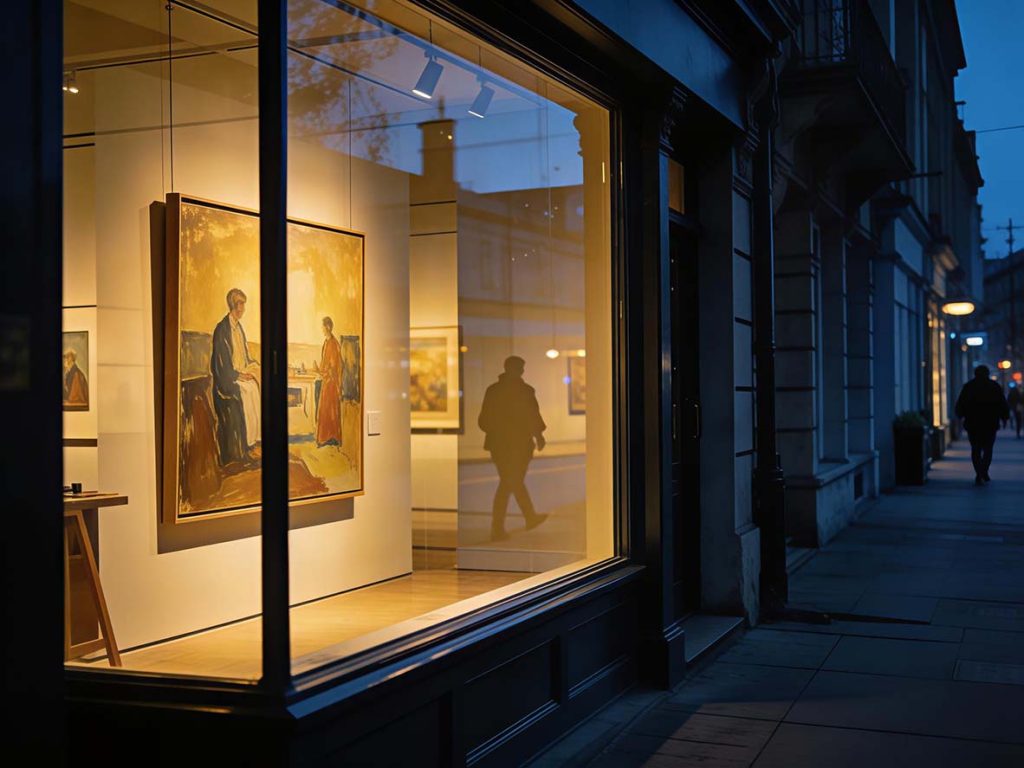
This distinction matters because the internet has blurred the line between access and entitlement. The fact that something can be seen does not mean it can be taken. A storefront window does not grant permission to empty the shelves after hours.
Yet that is precisely the logic being applied to creative work.
Consider professional participation. If I enter a digital rendering competition to win software, tools, or industry recognition that help me advance my craft, have I implicitly consented to my work being harvested for training systems I did not agree to support? At what point does engaging in a professional ecosystem become implied surrender of ownership?
This is where the argument quietly collapses.
Participation is not consent. Exposure is not forfeiture. Contribution is not donation.
If we accept the idea that public visibility nullifies rights, then authorship itself becomes conditional. The more successful, visible, or engaged a creator is, the fewer rights they retain. That is not progress. That is inversion.
And this logic does not stop with artwork.
Personal likeness, identity, voice, style, and association all sit downstream from the same reasoning. If public presence equals permission, then the only way to retain ownership is invisibility. That is not a workable ethic for a modern society, let alone a creative economy.
What makes this moment particularly dangerous is that the erosion is happening retroactively.
New technology is being used to justify new rules applied to old work, created under very different assumptions. Creators did not wake up one day and decide to donate their life’s work to future training systems. That choice is being made for them, after the fact, by those positioned to profit.
Most people defending this framework do not intend to discard ethics. But intention is irrelevant when the structure does exactly that.
The argument often shifts here. We are told that the scale is too large, the systems too complex, the ship already sailed. All of that may be true.
None of it changes the underlying reality.
Difficulty does not erase obligation. Complexity does not absolve responsibility. Automation does not cleanse extraction.
If consent was not obtained, it should be acknowledged. If compensation is owed but impractical, that should be admitted honestly, not reframed as inevitability or progress. If creative labor has been absorbed without permission, we should have the courage to name it plainly.
What we cannot do is pretend that “public-facing” was ever a moral blank check.
This conversation is not about rejecting technology. It is about refusing to let language be used to anesthetize conscience. It is about recognizing that human labor preceded the systems now built upon it and that authorship does not evaporate just because a machine can process it at scale.
Public-facing does not mean public property.
If we lose that distinction, we lose more than copyright. We lose the very idea that creative work belongs to the people who make it.
And once that is gone, no amount of innovation will replace what was taken.
This work reflects a CAHDD Level 2 (U.N.O.) — AI-Assisted Unless Noted Otherwise creative process.
Human authorship: Written and reasoned by Russell L. Thomas (with CAHDD™ editorial oversight). All final decisions and approvals were made by the author.
AI assistance: Tools such as Grammarly, ChatGPT, and PromeAI were used for research support, grammar/refinement, and image generation under human direction.
Images: Unless otherwise captioned, images are AI-generated under human art direction and conform to CAHDD Level 4 (U.N.O.) standards.
Quality control: Reviewed by Russell L. Thomas for accuracy, tone, and context.
Method: Computer Aided Human Designed & Developed (CAHDD™).