
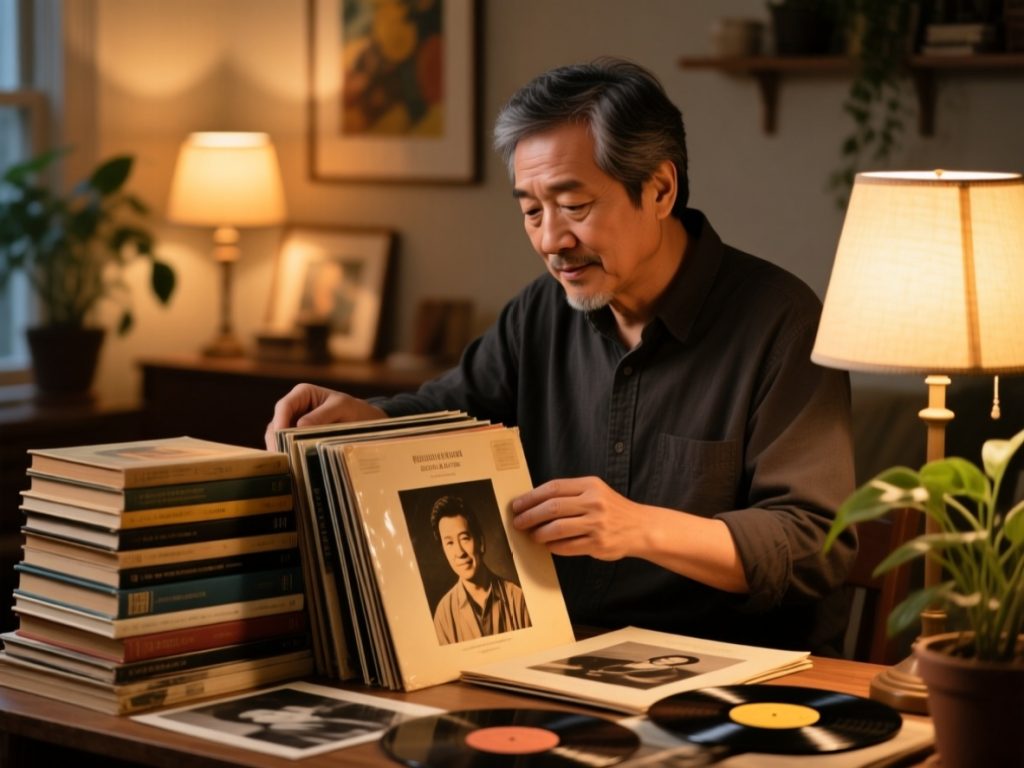
The Hidden Truth Behind All AI Output
Every time AI produces an image, a design, a melody, or a sentence that feels “good,” we’re really witnessing something deeper: a reflection of human taste.
AI doesn’t decide what is beautiful.
It doesn’t understand what is meaningful.
It doesn’t know why something feels balanced, elegant, emotional, or compelling.
It simply predicts what humans — artists, designers, architects, musicians, writers — have historically created, celebrated, or chosen.
Human judgment shapes AI.
Human taste trains AI.
Human culture defines AI’s boundaries.
Without human guidance, AI has no aesthetic compass at all.
Taste Is Built, Not Generated
Taste isn’t a style preference — it’s a lens. A worldview. A lifelong accumulation of influences, experiences, mistakes, mentors, environments, and emotions. Taste develops when humans engage with:
- art
- music
- architecture
- childhood experiences
- personal identity
- cultural background
- failures and successes
- the people who shaped us
AI cannot have taste because it cannot have a life.
It cannot fall in love with a painting the way a teenager does.
It cannot be moved by a song at the worst moment of someone’s life.
It cannot remember the first time a building took its breath away.
It cannot see the world through a personal history.
Taste is the sum of lived experience — something no model will ever possess.
Why Human Taste Still Sets the Standard
The irony is that people often talk about AI “deciding” what good art is, or “knowing” what makes a strong composition. But AI only mirrors collective human trends. It amplifies what already exists.
If human taste becomes shallow, AI becomes shallow.
If human taste becomes homogenized, AI becomes homogenized.
If human taste becomes more daring, AI becomes more daring.
AI is not leading creativity — it is following it.
And it will follow us to whatever cliff or horizon we point it toward.
This is why human taste remains the creative steering wheel.
Human Taste Is What Prevents Creative Collapse
If humanity ever stops cultivating taste — stops experiencing art, stops creating by hand, stops experimenting and developing its own sense of beauty — then AI’s output becomes a closed loop.
A loop of recycled aesthetics.
A loop of derivative remixes.
A loop of repetition that slowly collapses inward.
Human taste is what keeps creativity evolving. It introduces novelty, emotion, surprise, and intention — qualities AI cannot invent.
If we lose taste, we lose direction.
How CAHDD™ Helps Preserve Human Judgment
CAHDD™ reinforces the importance of human involvement in the creative process. The TechRatio™ makes visible where taste, intention, and judgment came from — and whether the work is the result of human-led decisions or pure automation.
Humanocentricus™ emphasizes that taste is part of our identity. Creativity is not merely execution — it is worldview. It is perspective. It is a lifetime of learning how to see.
AI can extend human taste.
It cannot replace it.
It cannot define it.
It cannot feel it.
Taste is human territory.
A Human-Centered Invitation
We would love to hear about someone or something that shaped your taste — a particular artist, architect, musician, album, building, movie, or childhood moment that changed how you see the world. Taste is a story, and we all have one.
CAHDD™ Creative Development Series
This index gathers our full collection of articles exploring childhood creativity, the human journey, and the core philosophies behind CAHDD™ and Humanocentricus™. Each article advances our mission to protect the human processes that shape imagination, taste, skill, and cultural evolution in the age of AI.
- Why Humanity Still Matters in the Age of AI: Protecting the Creative Journey
- Why Childhood Creativity Still Shapes the Adults We Become
- The Messy Sketchbook Matters More Than the Final Image
- Not Everything Is on the Internet: The Human Experience AI Cannot Access
- Fine Motor Skills, Focus, and the Slow Art of Becoming Human
- Why Real Skill Still Captivates Us in a Synthetic World
- The Danger of Cultural Stagnation When Creativity Is Outsourced to AI
- Human Taste Still Shapes AI — Not the Other Way Around
If you would like to contribute your story, share insight with future articles, or join CAHDD™ as an ambassador, we would love to hear from you.
This work reflects a CAHDD Level 2 (U.N.O.) — AI-Assisted Unless Noted Otherwise creative process.
Human authorship: Written and reasoned by Russell L. Thomas (with CAHDD™ editorial oversight). All final decisions and approvals were made by the author.
AI assistance: Tools such as Grammarly, ChatGPT, and PromeAI were used for research support, grammar/refinement, and image generation under human direction.
Images: Unless otherwise captioned, images are AI-generated under human art direction and conform to CAHDD Level 4 (U.N.O.) standards.
Quality control: Reviewed by Russell L. Thomas for accuracy, tone, and context.
Method: Computer Aided Human Designed & Developed (CAHDD™).