What this page is about:
This page explains why authorship is more than a label, and why identity, accountability, and human intent still matter even as AI-generated work becomes common and often indistinguishable from human-made work.
Why it is important:
When authorship disappears, responsibility disappears with it. In creative culture and design professions, that loss affects trust, fair credit, and the meaning audiences attach to the work itself.
Key takeaways:
- Authorship is not ego, it is ownership of decisions, intent, and responsibility.
- AI can assist creation, but it cannot replace human identity, values, or lived experience.
- CAHDD™ exists to keep the human fingerprint visible, so creators are not quietly erased.
Best next step:
Read Core Principles to see the ethical foundation CAHDD™ is built on and what CAHDD™ expects from human creators and communities going forward.
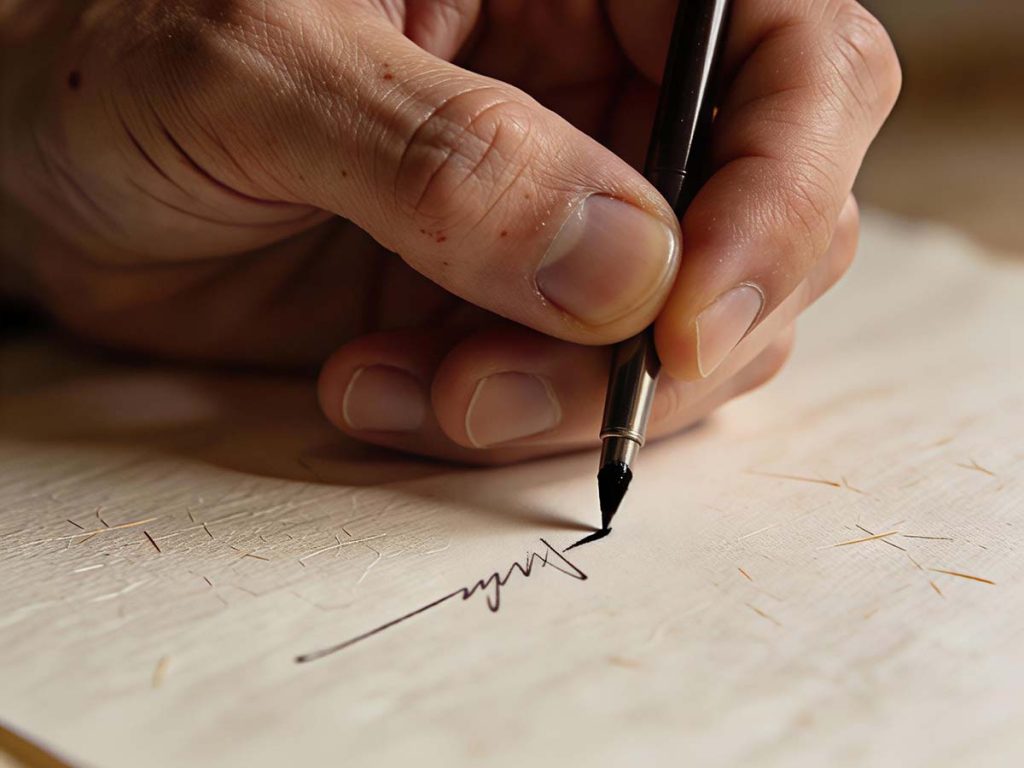
A signature is more than a name on a page. It is a claim of responsibility. When a creator signs their work or places their mark upon it, they are saying, “I stand behind this.” That signal has carried meaning for centuries, and it still does.
Authorship & Identity
This page articulates CAHDD™’s understanding of authorship and identity as foundational elements of creative integrity. It explains how responsibility, attribution, and visible authorship remain essential in environments shaped by automation and AI-assisted tools, and why preserving these signals is central to a human-centered creative future.
Authorship Is Responsibility
Authorship is not defined by how something is produced. It is defined by the human decision-making that gives a work purpose, direction, and meaning.
A creator is the individual or organization that sets intent, directs outcomes, exercises judgment, and accepts responsibility for the result. Tools may assist. Systems may automate. Creative agency remains human.
Responsibility cannot be delegated to software. It remains with the person or entity that claims the work. When a piece of work carries a name, signature, or mark, it asserts accountability. That assertion is the foundation of trust.
Identity as a Creative Signal
In an era of abundant generated output, visual quality no longer communicates origin.
When polished images, videos, and text can be produced at scale, appearance collapses into noise. Without a reliable signal of identity, creative output becomes indistinguishable and unanchored.
Identity provides context. It allows work to be evaluated not just on how it looks, but on who shaped it, why it was made, and how it connects to a creator’s history of decisions.
A visible identity enables continuity, accountability, and meaningful engagement over time. Identity is not branding. It is the signal that makes creative work legible.
Signatures and Logos as Identity Markers
Signatures and logos are not decorative elements.
They are identity markers that assert origin, authorship, and responsibility. Whether personal or organizational, these marks carry reputational meaning that cannot be replicated by machines without authorization.
CAHDD treats personal signatures and organizational logos as equivalent expressions of authorship. Both are symbols of human agency and accountability. Misuse of these markers constitutes false attribution. A signature or logo applied without consent is not homage. It is misrepresentation.
The Collapse of Visual Trust
For decades, audiences relied on visual cues such as composition, polish, and realism as proxies for credibility. Those cues no longer function as reliable indicators of human creation.
Automation has severed the link between appearance and origin. A flawless image no longer proves that a human was present. A convincing video no longer proves that an event occurred.
As a result, creative culture has shifted from trusting what is seen to needing clarity about who stands behind the work. Identity has become the primary creative signal.
False Attribution Is Counterfeit Authorship
A signature is a statement of authorship. When that statement is applied falsely, the signal becomes corrupted.
Forgery has long been understood as misrepresentation. Whether it appears on a contract, a painting, or a publication, a forged signature does not become legitimate because it was produced by a machine.
Automated systems that reproduce signatures or logos without consent are not generating creative signal. They are producing false signal. This is counterfeit authorship, and it undermines trust, dilutes reputation, and erodes the foundation on which creative culture depends.
Authorship in Automated and AI-Assisted Work
The use of automated tools does not negate authorship.
CAHDD does not oppose AI-assisted creation. Creators may explore styles, processes, and ideas with tools that accelerate imagination and production.
What CAHDD opposes is the false assertion of identity. Automated systems must not imply authorship they do not possess. Identity markers, including signatures, names, and logos, must never be generated, implied, or reproduced without explicit authorization from the rights holder.
Scale does not excuse misrepresentation.
The CAHDD Position on Authorship & Identity
CAHDD affirms the following principles.
Authorship is a human responsibility.
Identity markers assert origin and accountability.
Creative work must be attributable to real human agency.
False attribution is counterfeit authorship.
Automation must not falsely claim identity.
This position defines how CAHDD approaches creative work in environments shaped by automation and AI-assisted tools. It preserves the integrity of human contribution without rejecting technological advancement.
Purpose of This Page
This page establishes CAHDD’s foundational understanding of authorship and identity. It provides the conceptual ground from which related articles and discussions proceed.
It is not an enforcement document or mandate. It exists to clarify how CAHDD understands responsibility, attribution, and creative integrity.
Closing
Technology will continue to evolve.
The meaning of authorship does not have to.
Creative work remains human when responsibility remains visible.